


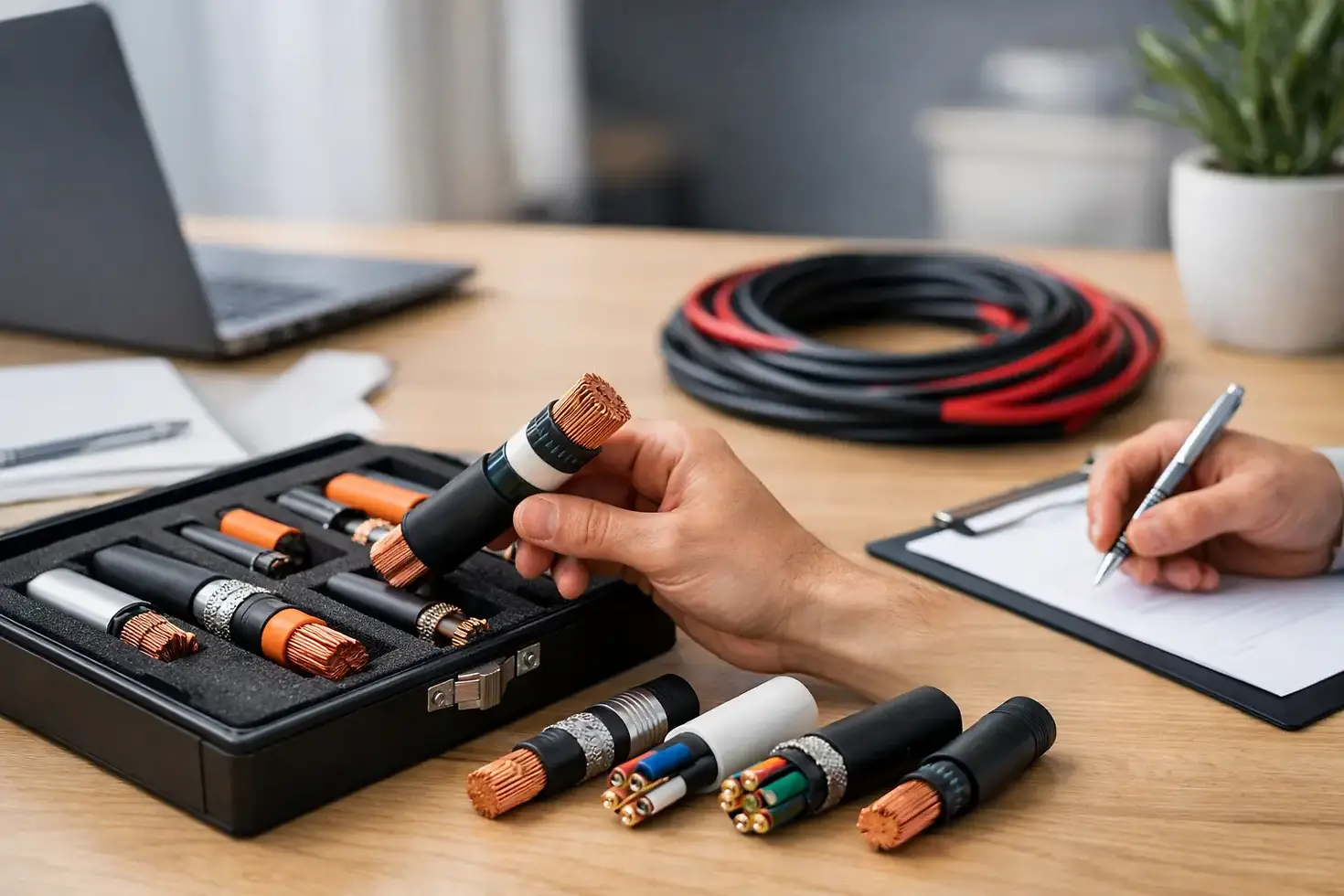
How to Request Cable Samples the Right Way
- Eci Wires

- 2 days ago
- 6 min read
If a cable sample arrives without the exact construction, marking, or test expectation you need, it does not help your project move forward. That is why knowing how to request cable samples matters. A clear sample request saves time for procurement, reduces back-and-forth with suppliers, and gives your engineering or quality team something they can actually evaluate.
For industrial buyers, a sample is rarely just a product check. It is often the first practical step before qualification, comparison, pilot installation, or a larger export order. The more precise the request, the more likely you are to receive a sample that reflects real production capability rather than a generic substitute.
How to request cable samples for industrial use
The fastest way to get a useful sample is to treat the request like a technical inquiry, not a casual product ask. A supplier needs enough detail to match the sample to your intended application, standards, and commercial direction.
Start with the cable type. If you need low voltage power cable, control cable, fiber cable, or a custom construction, say so directly. Include conductor material, number of cores, nominal cross-section, insulation type, sheath type, voltage rating, and any shielding or armoring requirement. If your team works from a datasheet, approved drawing, or bill of materials, use that language in the request.
You should also explain what the sample is for. A sample intended for visual approval is different from one intended for bend testing, connector fit, insulation review, print marking check, or lab evaluation. When the purpose is clear, the supplier can decide whether to send a cut length from standard production, a pre-production piece, or a specially prepared sample.
In many cases, buyers simply ask for “a sample of your cable.” That usually creates delay. The supplier then has to ask which cable, what size, what standard, what market, and what test expectation applies. A short but complete request is better than a broad one.
The details that should always be included
A strong sample request usually contains three parts: technical specification, project context, and logistics.
Under technical specification, include the exact product name or reference code if you have one. Add conductor class, insulation material such as PVC or XLPE, outer sheath requirement, flame performance if relevant, operating temperature, and any standard or regulation your market requires. If color coding, print legend, packaging style, or jacket marking matters, mention that too.
Project context helps the supplier understand whether this is a standard supply opportunity or a custom cable review. For example, if the sample is for a distributor line extension, an OEM approval, a contractor tender, or a utility-related project, that changes how the supplier prepares the response. Buyers do not need to share confidential project data, but basic context often improves sample accuracy.
Logistics are just as important. State the required sample length, the delivery address, the contact person, and the deadline. If your receiving department has document rules, mention them early. Some industrial sites will not accept shipments without a company name match, phone number, or customs-related paperwork.
Sample length is not a minor detail
One of the most common problems in how to request cable samples is asking for a sample without specifying length. A 20 cm cut piece may be enough for visual review, but it is not enough for stripping, bending, termination, or installation handling. On the other hand, asking for several full coils when only a short qualification sample is needed can slow down approval and increase shipping cost.
For jacket review or print marking, a short sample may be enough. For connector compatibility or installation trials, you may need a longer length. For electrical or mechanical testing, your lab may require a defined minimum. If you are unsure, confirm the exact test method internally before sending the request.
Mention standards and target market
A cable that looks similar on paper may not be suitable across all markets. Standards, labeling, and compliance expectations vary by country, application, and sector. If your project is tied to a specific market requirement, include that from the beginning.
This is especially important for international buyers. A supplier serving export markets may produce multiple versions of a similar cable family depending on customer specification, certification pathway, or installation environment. If the sample must reflect the version intended for your region, say so clearly.
When standard samples are enough and when they are not
Not every request needs a custom-prepared sample. If you are evaluating general manufacturing quality, conductor finish, insulation consistency, or outer sheath appearance on a standard product, an existing production sample may be enough.
But custom projects are different. If the order will require a special conductor design, unique core identification, nonstandard sheath compound, custom print marking, or a made-to-order construction, you should ask whether the sample represents actual production parameters or only a close equivalent. That distinction matters.
A standard sample can show baseline quality, but it may not prove that the final custom cable will match your exact specification. In that case, ask what can be confirmed at sample stage and what will be confirmed at production stage through drawing approval, technical datasheet review, or routine test documentation.
How buyers can avoid delays
Most delays happen before the sample is shipped, not after. The request is incomplete, the cable type is not identified clearly, or the supplier is waiting for commercial context before preparing anything.
A practical approach is to send your request in one message with complete data. Include the cable specification, intended use, target quantity if known, required sample length, destination, and review deadline. If your team needs supporting documents such as a datasheet or test report with the sample, ask for those at the same time.
It also helps to be realistic about timelines. If the sample is from a standard item, turnaround can be quicker. If it requires custom preparation or internal approval, more time may be needed. For export shipments, courier transit and customs handling can add another layer.
What to ask when you receive the sample
A sample should answer questions, not create new ones. When it arrives, check whether it matches the requested construction, marking, diameter range, flexibility, and visible finish. If your team evaluates samples formally, compare the delivered item against your original request line by line.
If the sample is for technical approval, ask for the corresponding specification sheet and available test information. If it is for a custom cable review, confirm whether the sample is fully representative of final production or only an indicative version. That single question can prevent costly assumptions later.
For procurement teams, this is also the right stage to verify practical points such as minimum order quantity, lead time, and whether the approved sample can be tied to the final production reference. A sample is useful only if it connects clearly to the commercial product you intend to purchase.
A practical sample request format
If your team wants a simple structure, keep it short and direct. State the cable type, key specifications, intended application, sample length, destination, and required date. Add any document request, such as datasheet or test report, and note whether the sample must represent standard production or a custom design.
That level of clarity usually gives the supplier enough to respond properly. For industrial manufacturers and exporters, it also signals that your company understands the qualification process and is serious about moving toward technical review or order planning.
At ECI Wires, buyers typically get the best sample support when the request is tied to a defined technical requirement rather than a broad product inquiry. That approach is faster for both sides and more useful for real project evaluation.
How to request cable samples without wasting procurement time
The best sample requests are specific, commercially relevant, and easy to act on. They do not overload the supplier with unnecessary text, but they do include the exact details needed to prepare the right item. If something is still undecided, say that clearly instead of leaving gaps.
For experienced buyers, the goal is not just receiving a cable piece in the mail. The goal is receiving a sample that helps engineering approve, helps quality inspect, and helps procurement move one step closer to a reliable supply decision. A well-written request does exactly that.


Comments