


Guide to Industrial Cable Testing for Buyers
- Eci Wires

- Jul 17
- 6 min read
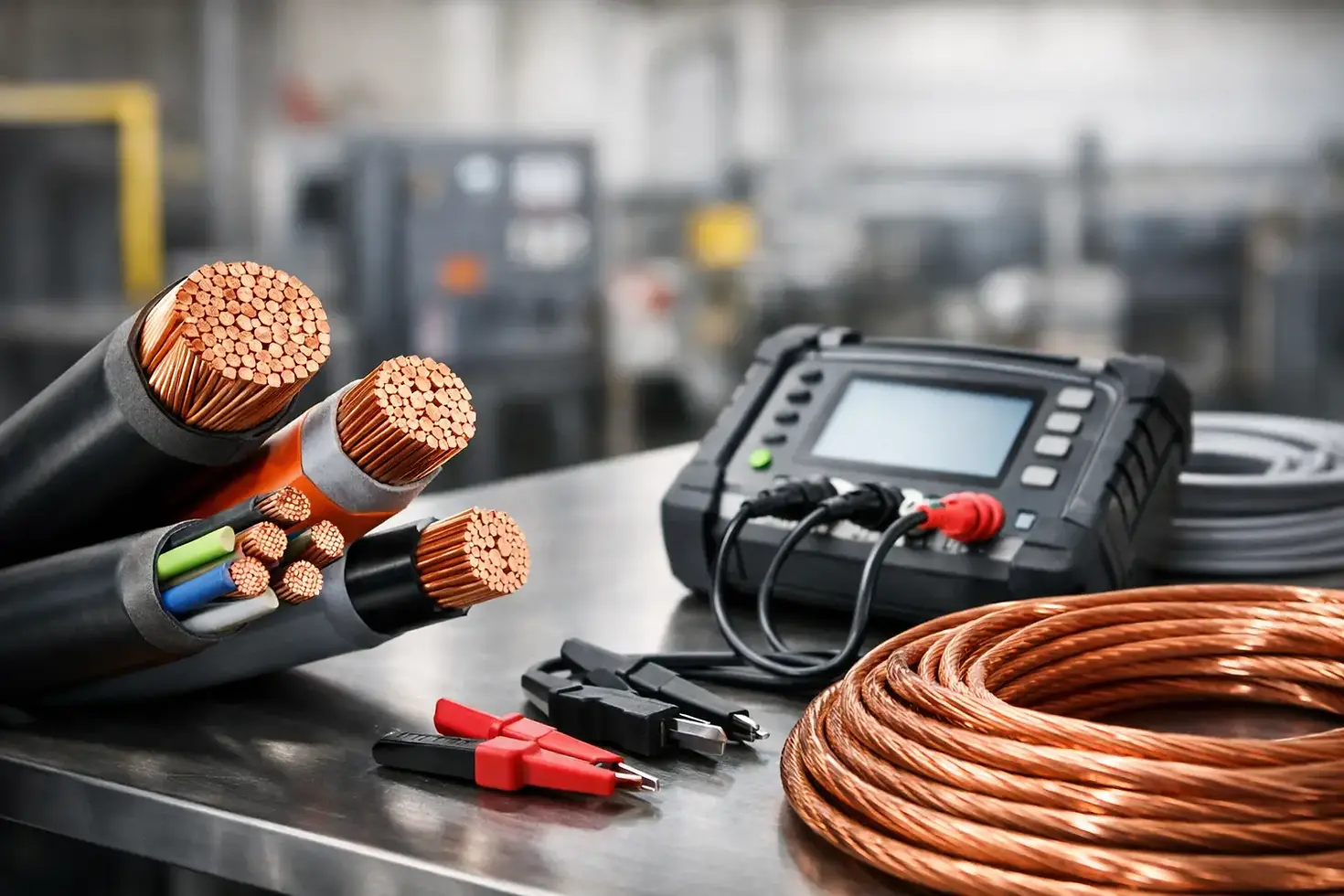
A cable reel can look correct on a loading bay and still create expensive problems after installation. Incorrect conductor size, damaged insulation, poor sheath quality, or incomplete test records may only become visible when a system is energized. This guide to industrial cable testing helps procurement teams, contractors, distributors, and project buyers assess whether low-voltage cable is suitable for the stated application before it reaches the site.
Industrial cable testing is not one single test. It is a controlled process that confirms the cable's electrical, mechanical, dimensional, and material performance against the agreed specification. The right test program depends on cable construction, rated voltage, installation environment, applicable standard, and project risk.
Start With the Cable Specification
Testing only has value when it is measured against a clear requirement. Before production or purchase approval, the buyer should define the cable type, conductor material, nominal cross-sectional area, core count, voltage rating, insulation and sheath compounds, shielding requirements, and expected installation conditions.
For example, a flexible copper control cable used inside machinery does not face the same requirements as an armored power cable installed underground. Likewise, a cable for dry indoor trays may not require the same oil, UV, water, flame, or chemical resistance as cable used in industrial processing plants. A test report cannot compensate for an unsuitable cable design.
The purchase specification should also identify the governing standard or project requirement. Depending on the market and application, this may refer to IEC, EN, BS, UL, or a customer-specific technical specification. Where requirements conflict, resolve the priority before manufacturing begins. This avoids a common issue in international supply: a cable may meet a general standard but fail a project-specific requirement that was not stated in the order.
Guide to Industrial Cable Testing: Main Test Categories
A complete cable quality plan normally combines routine tests performed on every production length with sample and type tests conducted on selected samples or representative designs. The exact scope should be agreed commercially and technically.
Conductor Checks
Conductor performance begins with the correct metal and dimensions. Copper or aluminum conductors are checked for construction, nominal size, strand arrangement, and DC resistance. Resistance testing is particularly useful because it confirms whether the conductor can carry current within the limits expected for its stated size.
Higher-than-permitted conductor resistance can lead to excessive voltage drop and heat generation. However, buyers should interpret results correctly. Resistance values are temperature dependent, so reports should state the test temperature and, where necessary, the value corrected to the reference temperature required by the applicable standard.
Visual examination also matters. The conductor should be free from contamination, severe oxidation, broken strands, and irregular compaction that could affect termination quality. For stranded conductors, flexibility and strand quality are practical concerns for installers as well as laboratory personnel.
Insulation and Sheath Measurements
Insulation thickness and outer sheath thickness are measured at defined points around a cable sample. These tests verify that the cable has adequate dielectric material and mechanical protection. A cable can have an acceptable average thickness while still having an excessively thin local point, which is why minimum values are often as important as average values.
The outer diameter should also be verified where installation space, cable glands, conduits, tray fill, or armor dimensions are critical. Small variations may be acceptable within a standard, but they can cause installation problems when a project uses fixed gland sizes or predesigned containment systems.
Material identification and compound performance may be relevant for specialized orders. For example, buyers may require PVC, XLPE, LSZH, rubber, or other compounds with defined temperature, flame, smoke, oil, or environmental properties. The requested performance should be stated as a measurable requirement rather than a general description such as “high quality” or “industrial grade.”
Electrical Withstand and Insulation Tests
Electrical tests are central to low-voltage cable acceptance. Insulation resistance testing checks the effectiveness of insulation between conductors and, where applicable, between conductors and metallic screens or armor. A low value can indicate moisture, contamination, insulation damage, or a manufacturing defect.
Voltage withstand testing applies a specified voltage for a controlled duration to confirm that the insulation system does not break down under electrical stress. This is often a routine production test for power cables. The voltage level, duration, and test arrangement must follow the cable standard or approved technical schedule.
Continuity testing verifies that each conductor remains electrically continuous from one end of the cable length to the other. For multicore cables, core identification should be checked at the same time. A continuity test is simple, but it can prevent serious commissioning delays caused by crossed, open, or incorrectly marked cores.
For shielded, armored, or screened cables, continuity of metallic components may also be relevant. The project should specify whether the armor or screen is intended for earth continuity, mechanical protection, electromagnetic control, or a combination of these functions.
Mechanical and Environmental Performance
Not every cable needs the same mechanical or environmental tests. Their value depends on where and how the cable will be installed. Cables used in demanding industrial environments may require tests for tensile strength, elongation, heat aging, cold bending, impact, abrasion, water immersion, or resistance to oils and chemicals.
Flame-related testing should be selected carefully. Flame retardance, fire resistance, smoke emission, halogen content, and circuit integrity are different properties. A flame-retardant cable may limit flame spread but may not continue operating during a fire. If a project requires emergency circuit operation, the buyer must state the relevant fire-resistance requirement rather than assuming all “fire cables” perform the same way.
There is a trade-off between broad performance requirements and cost. Specifying oil resistance, low smoke, halogen-free materials, UV resistance, cold flexibility, and high-temperature operation for every cable can increase price and lead time. Specify the environment accurately, then test for the risks that genuinely apply.
Review Test Documentation Before Shipment
For B2B cable procurement, documentation is part of the product. A useful test report identifies the manufacturer, cable description, production batch or drum number, test date, applicable standard, measured results, acceptance limits, and responsible quality approval.
A report that only states “passed” provides limited traceability. Buyers should be able to connect each delivered reel to its test records through clear drum marking, batch identification, or a certificate reference. This is especially important when cables are shipped internationally, stored at multiple locations, or released in phases for large infrastructure projects.
Ask whether the supplied documents are routine test reports, sample test reports, third-party inspection records, or type-test evidence. These documents serve different purposes. Routine tests confirm the specific manufactured length. Type tests demonstrate that a representative cable design can meet defined performance requirements. Neither should be presented as a substitute for the other.
Independent inspection can add value for high-risk orders, first-time supply relationships, or projects with strict consultant approval. It may include witness testing, random drum selection, visual inspection, measurement checks, and review of records before dispatch. For standard repeat orders, a manufacturer’s documented routine testing process may be sufficient, provided traceability and agreed quality controls are established.
Build Testing Into the Purchase Order
The most effective time to control cable quality is before manufacturing, not after a container arrives. Include the required cable standard, construction details, test scope, documentation format, packing requirements, and inspection rights in the purchase order or approved technical data sheet.
Define what happens if a result falls outside the agreed limit. The supplier should identify the affected production length, investigate the cause, and prevent nonconforming cable from being released. Clear acceptance criteria protect both parties and reduce arguments based on vague expectations.
On receipt, inspect cable reels for transport damage, correct labels, reel integrity, cable-end sealing, and quantity. If practical, carry out a receiving inspection that compares reel markings with the packing list and test documentation. For critical projects, retain samples or conduct confirmatory checks before installation begins.
ECI Wires supports industrial cable supply with production-focused documentation and made-to-order cable solutions for international projects. For custom cable orders, early agreement on the specification and test plan helps align production, inspection, shipping, and site acceptance.
The best cable testing program is not necessarily the longest one. It is the one that proves the characteristics that matter for the actual installation, gives buyers traceable evidence, and identifies problems while they can still be corrected before the cable becomes part of the system.

Comments