


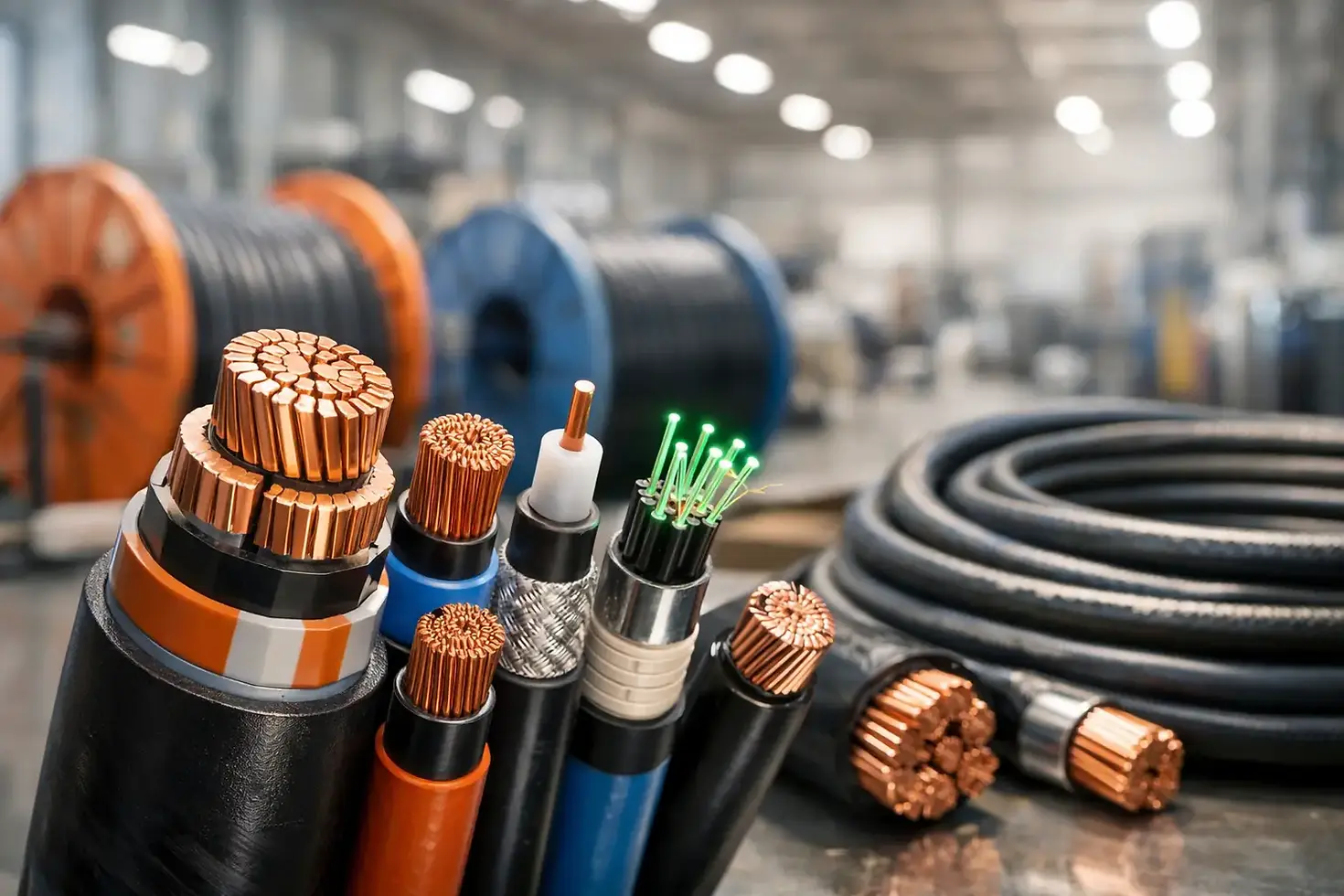
How to Source Industrial Cables Right

A cable problem rarely starts on the production floor. It usually starts much earlier - at the sourcing stage, when a spec sheet is treated like a formality, lead time is judged only by price, or supplier capability is assumed instead of verified. For buyers handling power distribution, machinery, infrastructure, or export projects, knowing how to source industrial cables correctly affects installation performance, compliance, cost control, and delivery risk.
Industrial cable procurement is not only about finding a manufacturer that can quote quickly. It is about matching the cable to the real operating environment, confirming that production quality is consistent, and making sure the supplier can support the commercial and logistics side of an international order. A low initial price can become expensive if the cable arrives with the wrong conductor class, insulation grade, drum length, labeling, or certification package.
How to source industrial cables with fewer procurement risks
The safest starting point is technical clarity. Many sourcing delays come from incomplete RFQs. A buyer may request a low voltage power cable, but without full details on conductor material, voltage rating, insulation type, sheath material, temperature range, installation method, screening, armor, flame performance, and applicable standard, the quote is only partial. That creates room for assumption, and assumptions are costly in industrial supply.
Before approaching suppliers, define the real application. A cable for fixed indoor installation has different requirements than one used in oil-exposed manufacturing areas, outdoor tray routing, or high-movement equipment. The correct choice depends on voltage class, mechanical stress, ambient conditions, chemical exposure, UV resistance, bending requirements, and expected service life. In some cases, a standard product is enough. In others, custom production is the better route because the project has a non-standard construction, conductor size, shielding requirement, or color identification format.
A complete sourcing brief should also include estimated annual volume, target shipment schedule, destination country, and any packing or marking requirements. These details help separate suppliers that simply sell cable from those that can actually support industrial procurement at scale.
Start with specifications, not price
Price matters, especially in competitive tenders, but it should not be the first filter. Industrial buyers usually know that two quotes for the same cable description can reflect very different products. Copper purity, insulation compound quality, conductor tolerance, sheath thickness, drum packing, and testing scope all affect the final result.
If the specification is unclear, a low quote may hide deviations rather than savings. The cable might use different insulation material, reduced copper content, or a construction that meets a local commercial norm but not the project standard. This is why technical comparison must come before commercial comparison.
A reliable sourcing process begins by confirming the exact standard or performance requirement. Depending on the project, that may include IEC-based construction, flame retardancy, voltage category, or project-specific approval criteria. When the application is critical, ask the supplier to state clearly what standard the offered cable is manufactured to and whether the offer is fully compliant or technically equivalent. Those are not the same thing.
What experienced buyers verify first
Experienced procurement teams usually review three points before discussing price in detail: whether the offered cable matches the specification line by line, whether the supplier can manufacture it consistently, and whether export documentation will be available without delay. If one of those elements is weak, the quote is weak, no matter how attractive the number looks.
Evaluate the supplier beyond the catalog
Many suppliers can share a product list. Far fewer can show strong manufacturing control, customization capability, and stable export execution. This matters because industrial cables are often purchased for projects where a missed delivery or technical issue affects a much larger system.
Ask practical questions. Is the cable produced in-house or sourced through multiple subcontractors? Can the supplier handle both standard and custom constructions? What routine, sample, and type tests are performed? How is raw material consistency managed for copper, aluminum, insulation, and sheath compounds? What is the normal production lead time by cable family and order size?
A capable supplier should be able to answer these questions directly and without vague language. If the order requires custom manufacturing, the supplier should also be able to discuss minimum order quantity, tooling implications, approval drawing process, and tolerances that may affect production time.
For international buyers, export experience is not a small detail. It influences packaging quality, labeling accuracy, document preparation, and communication speed. A manufacturer serving multiple countries is usually more familiar with destination-specific expectations, inspection requests, and the importance of shipment timing.
Check compliance, testing, and traceability
One of the most common mistakes in cable sourcing is treating compliance documents as a closing formality. They should be part of supplier selection from the beginning. Industrial buyers often need test reports, declarations of conformity, technical data sheets, drum schedules, and product marking details before approval can move forward.
The right documentation depends on the project and destination market. Some applications only require standard factory test records. Others may require third-party verification, project-specific inspection, or evidence of performance under defined fire or environmental conditions. The key point is simple: if a supplier cannot provide clear and timely technical documentation before order placement, documentation after production may also become a problem.
Traceability also deserves attention. Buyers should confirm how batches are identified, how production records are maintained, and how each shipment is tied to testing and packing data. When cable is installed across multiple sites or integrated into regulated projects, traceability saves time and reduces disputes.
How to source industrial cables for export projects
When the order crosses borders, cable sourcing includes more than construction and compliance. Export projects require attention to drum dimensions, container loading efficiency, moisture protection, labeling language, customs documentation, and transit risk. The wrong drum size can increase freight cost or create unloading issues on site. Inadequate packing can damage the cable before installation even begins.
This is where a supplier with manufacturing and export capability offers a practical advantage. The conversation can cover technical production, commercial terms, and shipment planning in one process rather than across separate parties. For buyers managing deadlines across regions, that reduces friction.
Balance standard products and custom production
Not every project needs a custom cable, and not every standard cable is suitable. Good sourcing decisions come from knowing which side of that line the application sits on.
Standardized low voltage power cables are often the most efficient option when the project aligns with common conductor sizes, insulation systems, and installation conditions. They are generally faster to quote, easier to produce in volume, and simpler to compare across suppliers.
Custom production becomes valuable when the project requires a specific conductor stranding class, non-standard core count, special sheath performance, project-marked printing, combined power and control elements, or unusual packaging format. In these cases, forcing the requirement into a standard product can create compromises that show up later during installation or operation.
The trade-off is lead time and planning. Custom cables often require more detailed approval, and the buyer should expect tighter technical coordination. That does not make custom production less attractive. It simply means the sourcing timeline should reflect the engineering reality.
Compare total supply value, not only unit cost
A lower unit price is not always a better cable purchase. Industrial buyers know the broader cost picture includes technical suitability, scrap risk, shipment reliability, documentation accuracy, and after-sales responsiveness. If a supplier misses a delivery window or ships cable with labeling errors, the project cost impact can easily exceed the original savings.
Total supply value also includes consistency across repeat orders. For distributors, OEMs, and contractors managing ongoing demand, stable quality matters more than occasional low pricing. A dependable cable source helps with forecasting, standardization, and long-term commercial planning.
This is one reason many buyers prefer working with manufacturers that combine production capability with trading flexibility. The manufacturer can support core product quality and technical control, while the commercial structure remains practical for mixed-volume or project-driven orders. ECI Wires operates in that space, supplying low voltage and industrial cable solutions for international markets where both specification accuracy and export readiness matter.
Build a sourcing process that prevents rework
The best cable sourcing process is usually the one that feels strict at the start. Clear specifications, detailed quotation review, supplier capability checks, documentation planning, and logistics alignment all take time before the order is placed. But they save much more time later.
For procurement managers, distributors, contractors, and OEM buyers, the goal is not to source the fastest quote. It is to source a cable that arrives as specified, performs as required, and supports the project without technical or commercial surprises. That is the real standard for how to source industrial cables well.
A good supplier should make that process easier, not more complicated. If the conversation becomes clearer as technical detail increases, you are usually dealing with the right kind of partner.


Comments