


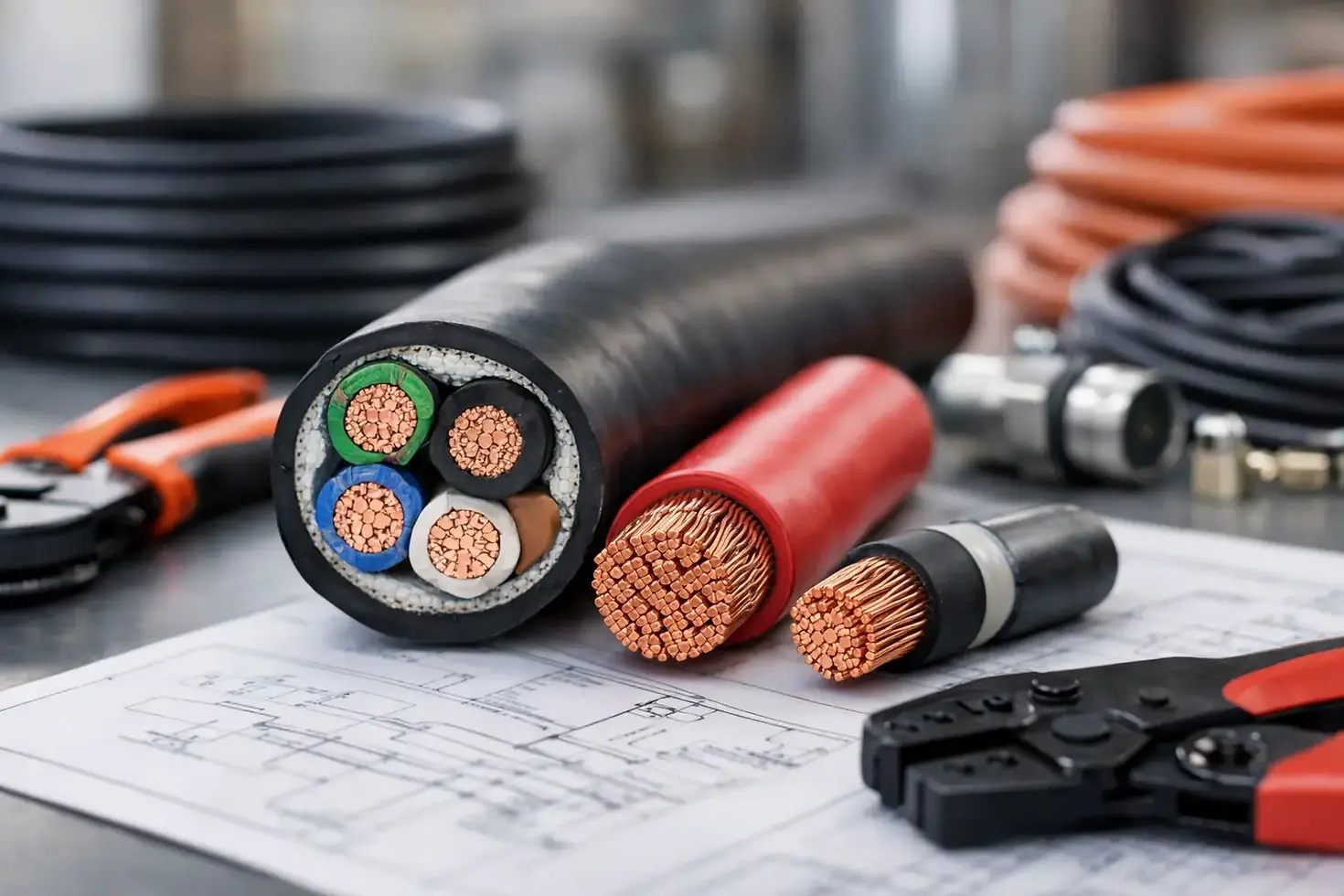
How to Specify Power Cables Correctly

A cable schedule that looks complete on paper can still fail at bid stage or installation. The usual reason is simple: the cable was described by size and voltage only, while the actual application needed much more detail. If you want to understand how to specify power cables correctly, the goal is not just to name a cable. The goal is to define electrical performance, installation conditions, compliance requirements, and supply expectations clearly enough that the right product is manufactured and delivered the first time.
Why cable specification fails so often
In many projects, the first draft of a cable specification starts with conductor size, core count, and voltage rating. That is necessary, but it is rarely sufficient. Two cables can share the same nominal voltage and conductor area while performing very differently in heat, sunlight, oil exposure, tray installation, or continuous industrial duty.
This is where costly mismatches begin. A contractor may price a standard construction cable while the operating environment actually requires stronger sheath performance, tighter fire behavior, or a different conductor class for termination needs. Procurement teams then face delays, technical clarifications, or replacement costs that could have been avoided with a better specification at the start.
How to specify power cables from the load backward
The most reliable way to specify a cable is to begin with the actual duty of the circuit, not with a familiar catalog item. Start from the electrical load, then move outward into the installation environment and regulatory requirements.
The first question is current demand under real operating conditions. Rated load, starting current, duty cycle, and future expansion all matter. A cable that is acceptable for steady-state current may be undersized for motor starting, grouped installation, or elevated ambient temperature. Voltage drop also needs attention, especially on long runs. In low voltage systems, voltage drop often becomes the practical design limit before ampacity does.
Short-circuit performance is the next filter. The conductor and insulation system must withstand the prospective fault level for the required duration. This point is often overlooked in early-stage purchasing specifications, yet it has direct implications for conductor size and material selection.
Once electrical duty is clear, the installation method shapes the rest of the specification. A cable installed in air, in conduit, buried directly, or on tray will not be rated the same way. Grouping factors, soil thermal resistivity, route congestion, and bending requirements all change what is suitable.
Define the core technical data clearly
A useful specification is precise enough that different suppliers will interpret it the same way. That means stating the main technical parameters in a structured form rather than relying on broad descriptions.
Conductor material and construction
State whether the conductor must be copper or aluminum, then define the conductor class if flexibility or termination behavior matters. For fixed industrial power distribution, stranded conductors are common, but conductor class still affects installation handling and connector compatibility.
Material choice is rarely just about price. Copper offers compact size and strong conductivity, while aluminum can reduce cost and weight for certain applications. The trade-off is that aluminum usually needs larger cross-sections and more attention at terminations. If the project has space limits in trays or panels, that trade-off should be decided before tendering.
Voltage rating and system type
Specify the required voltage designation and confirm whether the cable is intended for low voltage distribution, equipment connection, feeder circuits, or another defined use. This sounds basic, but general wording can lead to equivalent-looking offers that are not actually equivalent in insulation thickness or application standard.
Number of cores and cross-section
Define core count, nominal cross-sectional area, and whether a neutral or protective conductor is included. If color identification or numbering is required, state that as well. For international supply, this prevents confusion across markets where marking conventions may differ.
Insulation and sheath material
Insulation and outer sheath are not secondary details. They determine whether the cable survives the site conditions. PVC may be acceptable for many standard indoor low voltage applications, while XLPE may be preferred where thermal performance is more demanding. Sheath selection depends on mechanical stress, chemical exposure, moisture, UV exposure, and fire performance requirements.
A cable installed inside a dry electrical room does not need the same jacket properties as one routed across an industrial plant, exposed rooftop, or underground duct bank. Good specifications reflect that difference.
Installation conditions are part of how to specify power cables
A technically correct cable can still be the wrong cable if the installation environment is not stated. This is one of the biggest gaps in RFQs and project schedules.
Temperature, grouping, and routing
Ambient temperature, conductor operating temperature, cable grouping, and route type all affect current-carrying capacity. If several circuits are installed together, derating applies. If the cable passes through hot process areas, standard assumptions may no longer hold.
Routing also matters. Fixed tray installation, conduit pulls, vertical risers, and direct burial each create different mechanical and thermal conditions. When buyers provide route details early, manufacturers and suppliers can align recommendations with actual use rather than with generic assumptions.
Environmental exposure
Moisture, oils, chemicals, abrasion, UV exposure, and outdoor weathering should be stated directly. If the cable is intended for industrial production lines, marine-adjacent sites, water treatment facilities, mining, or heavy manufacturing, that context changes material selection.
There is no single best sheath for every case. A lower-cost option may be perfectly suitable for a controlled indoor installation, but false economy in aggressive environments usually appears later as premature aging or sheath damage.
Fire performance and compliance
Many buyers now require more than basic electrical suitability. Depending on the building type, industry, and country, the project may require flame retardancy, low smoke behavior, halogen-free construction, or other fire-related characteristics. These should never be left implied.
If compliance with IEC, BS, VDE, or another standard is required, identify it explicitly. International procurement often involves equivalent technical language that is not fully equivalent in testing or construction. Clear reference standards reduce disputes and help suppliers quote accurately.
Specify supply and project requirements, not just cable design
For B2B buyers, cable specification is also a supply-chain document. The product must fit the project technically, but it must also fit packaging, logistics, documentation, and delivery conditions.
State the required drum lengths, marking format, labeling language if necessary, and any documentation needed such as test reports, certificates, or origin-related export documents. Large projects may also need manufacturing batch traceability or pre-shipment inspection requirements.
This is especially important when the order involves international shipment. A technically correct cable that arrives on impractical drum lengths or without the required documentation can create the same disruption as a technical mismatch. Experienced manufacturers serving global markets usually treat these details as part of the specification, not as an afterthought.
Common mistakes buyers should avoid
The most common mistake is overgeneralization. Terms like power cable, industrial cable, or armored cable are too broad to support accurate pricing and production. Another frequent issue is copying an old specification from a different project without checking whether the environment, load profile, or standards are still the same.
Some buyers also specify excessive performance without a practical reason. That can drive unnecessary cost. Others do the opposite and leave critical requirements open, which invites the lowest compliant interpretation. Both approaches create problems. The right specification is not the most expensive one. It is the one that matches the application closely.
A further issue is treating custom production as a last-minute fix. In reality, many industrial and export projects benefit from tailored construction, marking, or packaging from the start. Suppliers with manufacturing capability can often support this efficiently if the requirements are defined early.
What a strong cable inquiry should include
A good inquiry allows the supplier to confirm suitability quickly and quote with fewer revisions. In most cases, it should include system voltage, load data, installation method, ambient conditions, conductor preference, insulation and sheath expectations, fire or compliance requirements, core configuration, required standards, and delivery details.
If there is uncertainty on one or two points, it is better to state that openly than to leave the supplier guessing. Clear technical discussion at the quotation stage is usually faster than correcting assumptions after production planning begins.
For international industrial buyers, this is where an experienced export-oriented manufacturer adds value. A supplier that understands both production and cross-border project requirements can help align technical needs with practical supply terms, especially for low voltage cable applications where installation conditions vary widely from one market or project type to another.
The best cable specification is the one that leaves little room for interpretation while still matching the real job site. When the electrical duty, environment, standards, and delivery requirements are all defined together, buying becomes easier, quoting becomes cleaner, and the cable is far more likely to perform exactly as expected.


Comments