


Industrial Wire Supplier for Distributors
- Eci Wires

- Apr 12
- 6 min read
Distributors lose margin in small ways long before they lose a customer. A delayed shipment, inconsistent conductor quality, missing export paperwork, or a supplier that cannot hold specification from batch to batch can turn a profitable account into a constant issue. That is why choosing the right industrial wire supplier for distributors is not just a sourcing decision. It is a commercial decision that affects inventory flow, customer confidence, and long-term account retention.
For distributors serving industrial, construction, infrastructure, and OEM markets, wire and cable supply has to do more than arrive. It has to match technical requirements, support repeat orders, and stay competitive against market pressure. The supplier also needs to understand that distributor business is rarely one-dimensional. Some orders are standard and high volume. Others are project-based, specification-driven, and time-sensitive. A supplier that only performs well in one of those conditions can create gaps in your offering.
What distributors should expect from an industrial wire supplier
A capable industrial wire supplier for distributors should combine manufacturing discipline with commercial flexibility. That means stable production quality, clear technical documentation, and the ability to support both stocked lines and custom requirements. In practical terms, distributors need a supplier that can serve routine demand without losing control when a non-standard request appears.
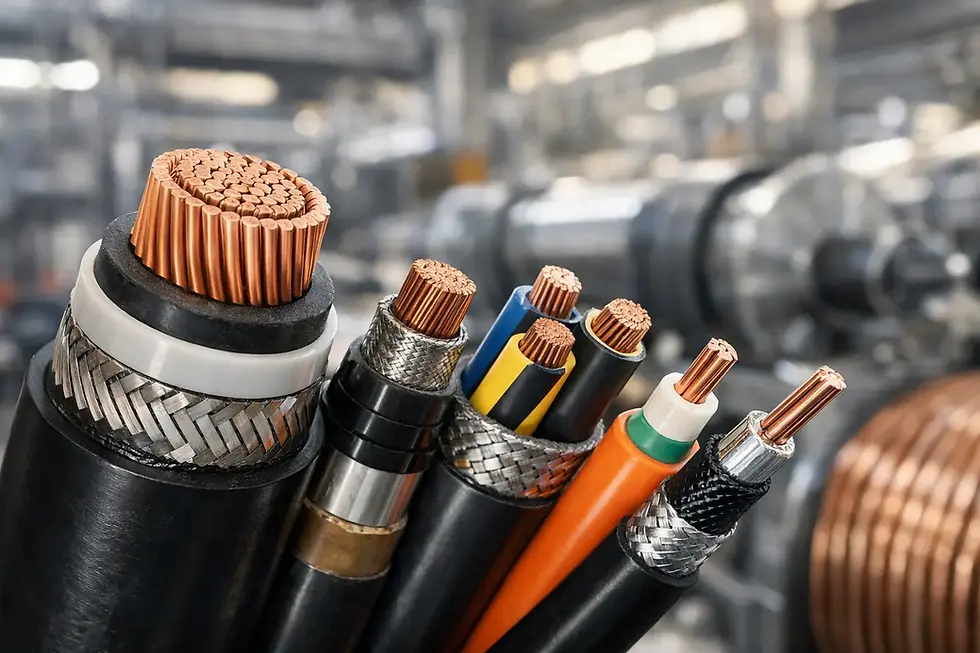
This matters most in low voltage power cable and industrial wire categories, where end users may request copper, aluminum, or fiber-based solutions depending on application, installation environment, and price target. A distributor cannot afford to go back to the market every time a specification changes slightly. The better supplier is the one that can keep a core range available while still supporting project-specific production when needed.
Export capability also matters more than many buyers admit at the beginning of the relationship. A factory may produce acceptable cable, but if it cannot manage international shipping requirements, labeling expectations, packing standards, or document accuracy, the operational burden shifts to the distributor. That creates hidden costs even when the unit price looks attractive.
Manufacturing capacity matters more than broad catalogs
Many suppliers present long product lists. That can look impressive, but distributors should focus less on catalog length and more on production control. A broad catalog is useful only when the supplier can deliver consistent quality across that range.
A manufacturer-led supplier generally gives distributors better control over repeatability. Production oversight, conductor quality, insulation consistency, and testing discipline are easier to verify when the supplier is directly involved in manufacturing instead of relying only on third-party sourcing. This is especially relevant for buyers who need low voltage cables in recurring volumes and cannot risk variation between shipments.
At the same time, there is a trade-off. Some pure manufacturers are rigid. They run efficiently for standard products but struggle with mixed orders, custom dimensions, or market-specific requests. For distributors, the stronger model is often a supplier that combines manufacturing specialization with trading flexibility. That structure can support standard items at scale while still handling special orders without slowing down the core business.
Why custom production can protect distributor growth
Distributors often begin by sourcing standard constructions because those products move faster and are easier to compare across vendors. Over time, however, growth usually comes from accounts that need more than standard stock. Contractors, OEMs, and project developers may require a modified cable design, a different conductor material, or a cable built around installation and performance constraints.
When a supplier cannot support these requests, the distributor has two bad options. Either walk away from the opportunity or split procurement across multiple sources. Both create friction. The first limits revenue. The second adds complexity, weakens purchasing leverage, and increases quality risk.
A supplier with custom-made production capability gives distributors a better position in the market. It allows them to respond to specification-based demand without building a new supply chain every time. That does not mean every custom request should be accepted automatically. Some are too small, too urgent, or too technically narrow to make sense. But having the option changes the commercial conversation with end customers.
Quality is not just compliance on paper
Experienced distributors know that technical sheets alone do not prove supply reliability. Documentation matters, but so do process discipline, material traceability, and consistency over repeated runs. Quality in industrial wire supply is less about one successful shipment and more about whether the fifth or tenth shipment matches the first.
This is where technical communication becomes critical. A strong supplier answers specification questions clearly, flags application limits early, and confirms whether requested changes affect lead time, performance, or price. A weaker supplier tends to say yes too quickly and solve problems later, usually after production has already started.
For distributors, that difference is expensive. Misalignment on conductor class, insulation type, voltage rating, or packaging format can lead to claims, delays, or inventory that does not fit customer use. The right supplier reduces those risks by treating specifications as production controls, not just sales tools.
Export support is part of the product
For international distributors, supply value goes beyond the cable itself. Shipment readiness, export documentation, packaging integrity, and communication around delivery schedules all shape whether the order is commercially successful.
An export-oriented supplier understands that cross-border trade requires precision. Product marking, palletization, drum handling, customs documentation, and lead time visibility are not side issues. They directly affect warehousing, onward transport, and final delivery commitments.
This is where globally experienced manufacturers stand apart from local commodity sellers. A supplier that already serves multiple international markets is more likely to understand what distributors need before problems appear. That includes adapting to destination-specific requirements, supporting document flow, and maintaining practical communication when schedules change.
ECI Wires operates with this exporter mindset, combining industrial cable manufacturing with international supply experience for buyers who need dependable low voltage cable support across markets.
Price matters, but cost control matters more
Every distributor watches price. That is expected. In competitive wire and cable markets, a supplier that cannot offer commercially viable pricing will not stay in consideration for long. Still, experienced buyers know the lowest price rarely delivers the lowest total cost.
A cheaper shipment can become more expensive if quality claims rise, reorder cycles become unstable, or stock planning gets harder because lead times keep moving. The more project-sensitive your customer base is, the more damaging those issues become. Cost control comes from supply consistency, specification accuracy, and dependable delivery as much as from unit pricing.
This creates an it depends scenario. If your business is built around fast-moving standard items with narrow technical variation, aggressive pricing may carry more weight. If you serve industrial projects, OEM accounts, or infrastructure buyers, supplier capability usually matters more than small price differences. The best partners can offer both competitive pricing and enough technical depth to prevent downstream losses.
How to evaluate an industrial wire supplier for distributors
The best evaluation process is practical. Start with the products you move most often, then test the supplier against the situations that usually create friction in your business. Ask how they manage repeat orders, custom requests, and mixed shipments. Review whether technical responses are precise or overly general.
Look closely at product range, but do not stop there. Ask whether production is in-house, partially outsourced, or fully traded. Clarify lead time behavior for standard items versus custom-made cables. Confirm how export packaging is handled and how documentation is issued. If your market includes regular specification changes, check how engineering and commercial teams communicate during quoting and production.
The strongest supplier relationship is usually the one that feels predictable. Not perfect, but predictable. You know what quality level to expect, what lead time range is realistic, and how exceptions will be handled if a project requirement changes.
A supply partner should help you sell with confidence
Distributors do not need marketing language from suppliers. They need stable product performance, useful technical answers, and a supply model that supports customer retention. A true partner helps the distributor protect margin while expanding into more demanding accounts.
That support may come from standardized copper and aluminum cable production, from fiber options for specific industrial uses, or from the ability to build around customer specifications without losing cost discipline. What matters is not just what the supplier can make, but how reliably that capability translates into delivered orders.
If you are reviewing your current supply chain, focus on the supplier's operating model as much as the product itself. The right industrial wire supplier for distributors will give you something more valuable than a broad price sheet. It will give you a more dependable way to serve your market, order after order.


Comments